Art therapists are highly trained clinicians with master’s-level or higher qualifications in both art and therapy. They work across a wide range of settings, including hospitals, wellness centers, schools, and private practices, serving diverse communities. Their education and supervised clinical experience equip them to provide culturally sensitive care in alignment with ethical standards and professional guidelines. As credentialed mental health professionals, art therapists are dedicated to supporting individuals’ mental, emotional, and physical well-being, fostering healing and growth through the creative process.
Arts Based Therapy
It utilizes creative expression to support emotional and psychological healing. By engaging in activities like drawing, painting, sculpting, and other art forms, individuals can explore their feelings and experiences in a non-verbal way. This therapeutic approach helps uncover hidden emotions, reduce stress, and enhance self-awareness. It is especially beneficial for those who find it challenging to express themselves through words. Arts-based therapy fosters creativity, promotes emotional release, and supports personal growth and mental well-being.
Benefits of Arts Based Therapy for Individuals and Groups
Enhanced Emotional Expression
Increased Self-Awareness
Stress Reduction
Trauma Processing
Improved Problem-Solving Skills
Enhanced Communication Skills
Boosted Self-Esteem and Confidence
mproved Social Interaction
Enhanced Empathy and Understanding
Strengthened Group Cohesion
Conflict Resolution
Increased Engagement
Shared Learning and Growth
Facilitation of Group Dynamics
WHO ARE ART THERAPISTS
HOW ART THERAPY WORKS
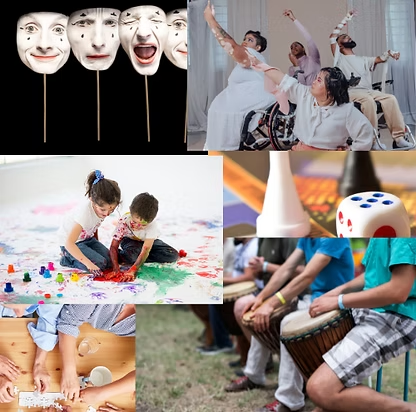
Through integrative methods, art therapy engages the mind, body, and spirit in ways that are distinct from verbal articulation alone. Kinesthetic, sensory, perceptual, and symbolic opportunities invite alternative modes of receptive and expressive communication, which can circumvent the limitations of language. Visual and symbolic expression gives voice to experience and empowers individual, communal, and societal transformation.
Frequently Asked Questions – Arts-Based Therapy | Zill Botadkar
1. What is Arts-Based Therapy and how does it work?
Arts-Based Therapy is a form of psychotherapy that uses creative processes such as painting, movement, music, drama, or writing to help individuals express and explore their emotions. It provides a safe, non-verbal way to understand thoughts and feelings that may be hard to express through words, leading to emotional release and personal growth.
2. Who can benefit from Arts-Based Therapy?
Arts-Based Therapy is beneficial for people of all ages — children, teenagers, adults, and older adults. It supports individuals dealing with stress, anxiety, depression, trauma, grief, emotional regulation difficulties, or those simply wanting to improve self-awareness and mindfulness.
3. What are the main benefits of Arts-Based Therapy?
Helps reduce stress and anxiety
Improves emotional awareness and regulation
Enhances confidence and self-esteem
Encourages self-expression and creativity
Supports trauma healing and emotional release
Promotes relaxation and mental clarity
4. Do I need to be good at art to join Arts-Based Therapy?
Not at all. No artistic skill or background is needed. The focus is on the process of creation, not the final artwork. The goal is to express and understand your emotions, not to create something perfect.
5. What happens during an Arts-Based Therapy session?
A typical session may include creative exercises such as drawing, painting, or movement, followed by reflection and discussion guided by a trained therapist. You’ll explore what emotions or insights emerged during the activity, helping you connect deeper with yourself.
6. Is Arts-Based Therapy suitable for children and teens?
Yes. It’s particularly effective for children and teenagers who may struggle to express emotions verbally. Through art and play, they can communicate feelings more easily, build self-esteem, and develop emotional awareness in a fun and supportive environment.
7. Can Arts-Based Therapy be combined with other therapies?
Absolutely. It can be used alongside traditional counselling, Cognitive Behavioral Therapy (CBT), or mindfulness practices. Combining therapies allows for a holistic approach that supports both emotional and mental well-being.
8. Why choose Zill Botadkar for Arts-Based Therapy in Pune?
At Zill Botadkar, therapy is creative, compassionate, and personalized. With professional training in Arts-Based Therapy, we help clients uncover emotions, manage stress, and build emotional resilience through a balance of psychology and artistic expression.